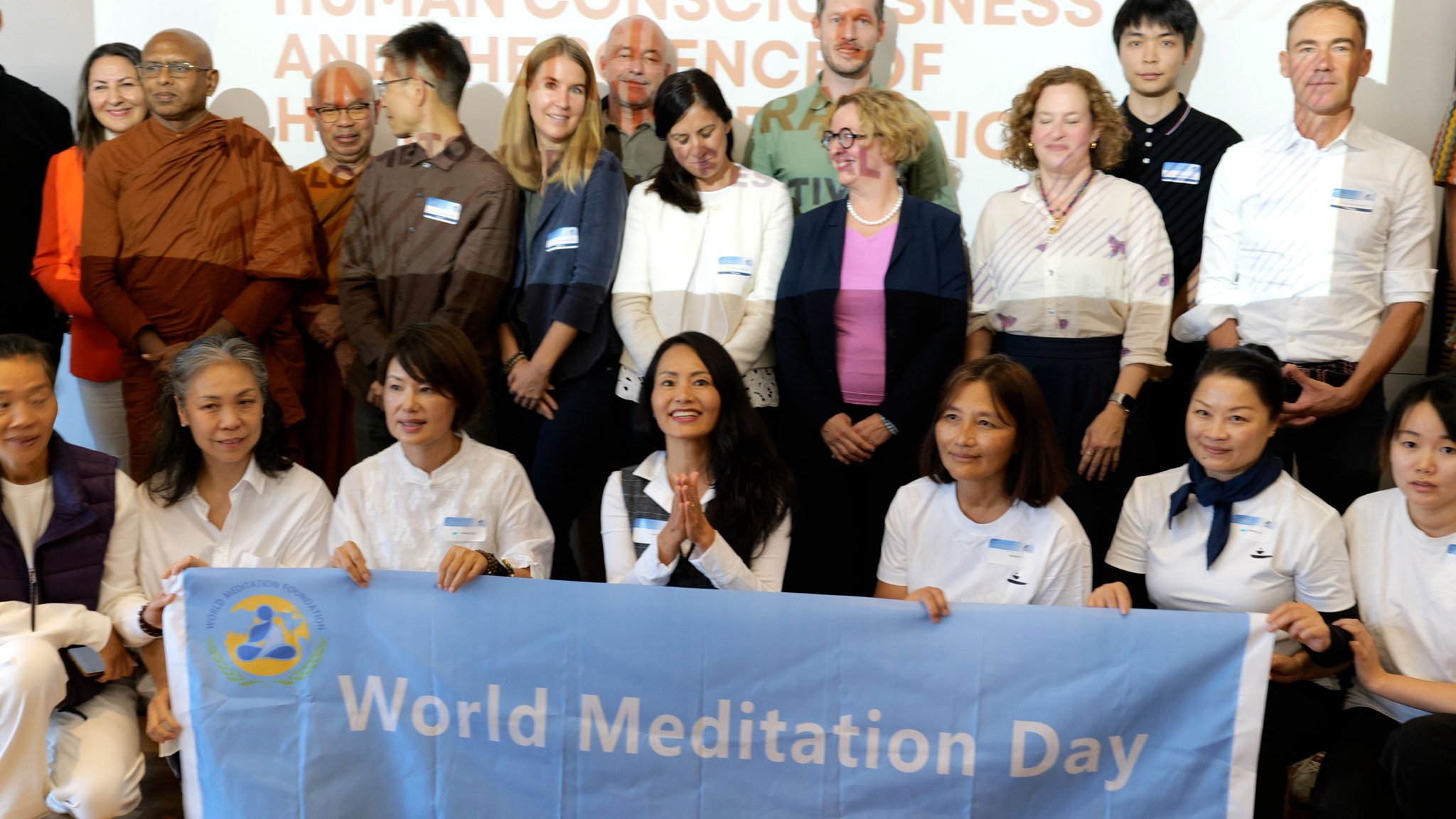
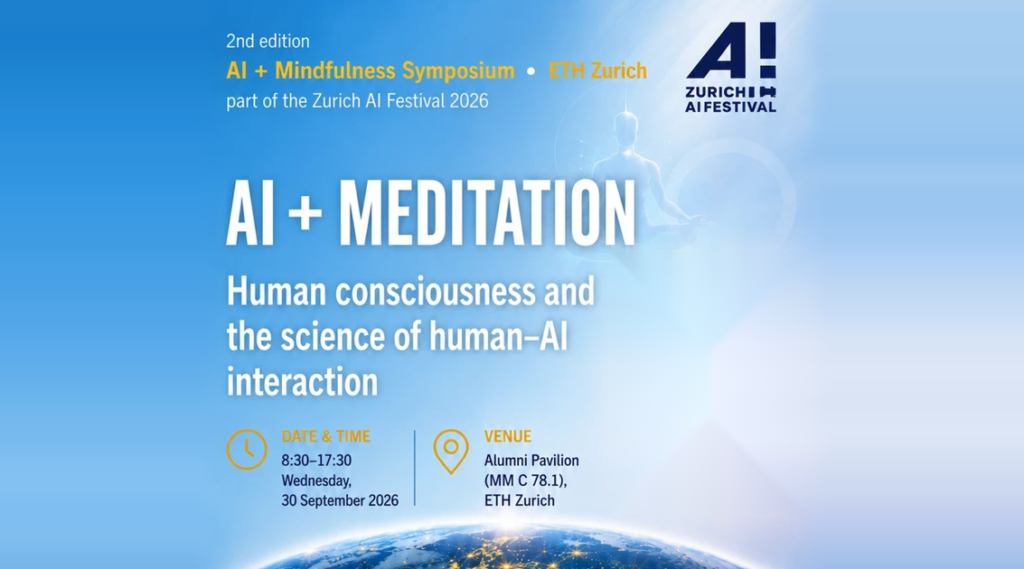
ZURICH, 30 September 2026 — The second AI and Mindfulness Symposium took place today at ETH Zurich, bringing together speakers from AI research, human rights, public health, mental health and meditation practice. Participants discussed how artificial intelligence is changing human attention, judgement and daily life, and the role meditation can play in the age of AI. The symposium also launched the Light Up the World Global Campaign 2026, with a global synchronised meditation planned for 21 December, World Meditation Day.
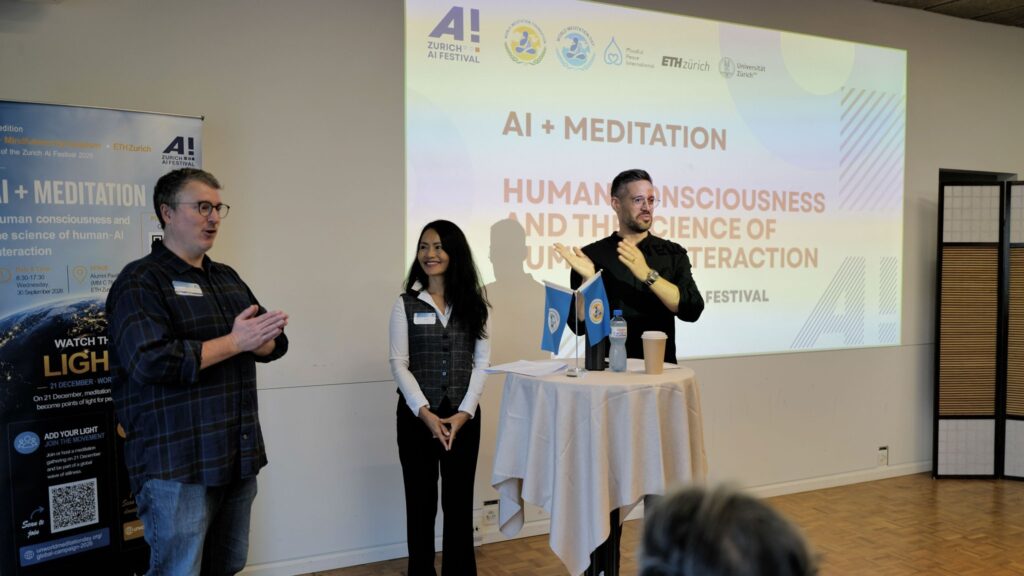
The symposium was part of Zurich AI Festival 2026 and was organised by the World Meditation Foundation in collaboration with ETH Zurich, the University of Zurich and Mindful Peace International. Under the theme “AI + Meditation: Human Consciousness and the Science of Human–AI Interaction”, the day-long event featured talks, research presentations, panel discussions and practical sessions designed to encourage dialogue across disciplines.
From Human Rights and Wellbeing to AI and Mental Health
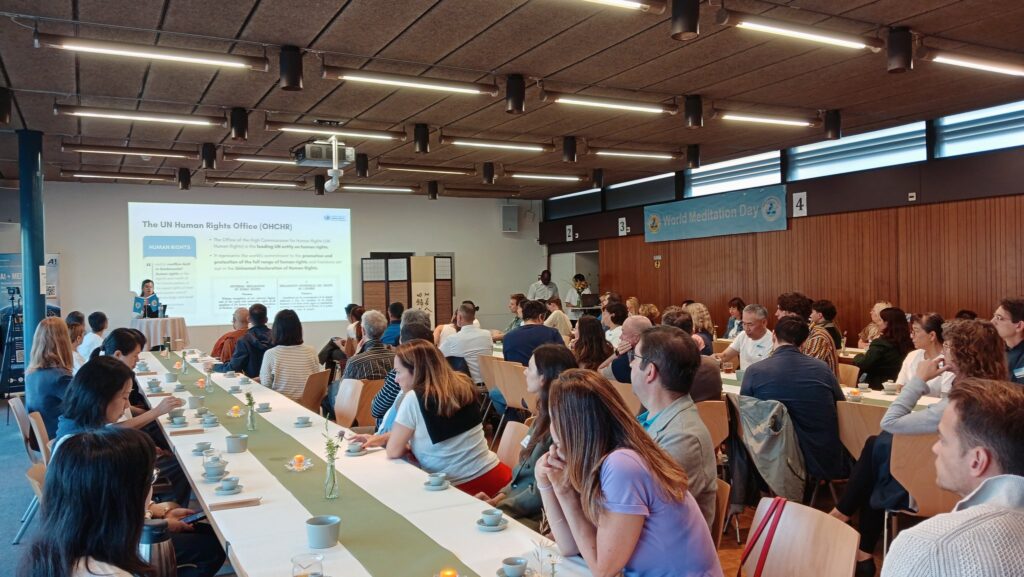
Mara Arizaga, Head of the Well-Being Unit at the Office of the United Nations High Commissioner for Human Rights (OHCHR), discussed human rights, wellbeing and contemplative practices in the age of AI. She leads OHCHR’s “United & Present – Global Solutions from Within” initiative and coordinates its annual reports released in connection with World Meditation Day. The 2025 report was titled The Universality of Meditation. Dr Zhenbao Jin of the World Meditation Foundation explored the differences between AI and human intelligence from the perspective of meditation practice.
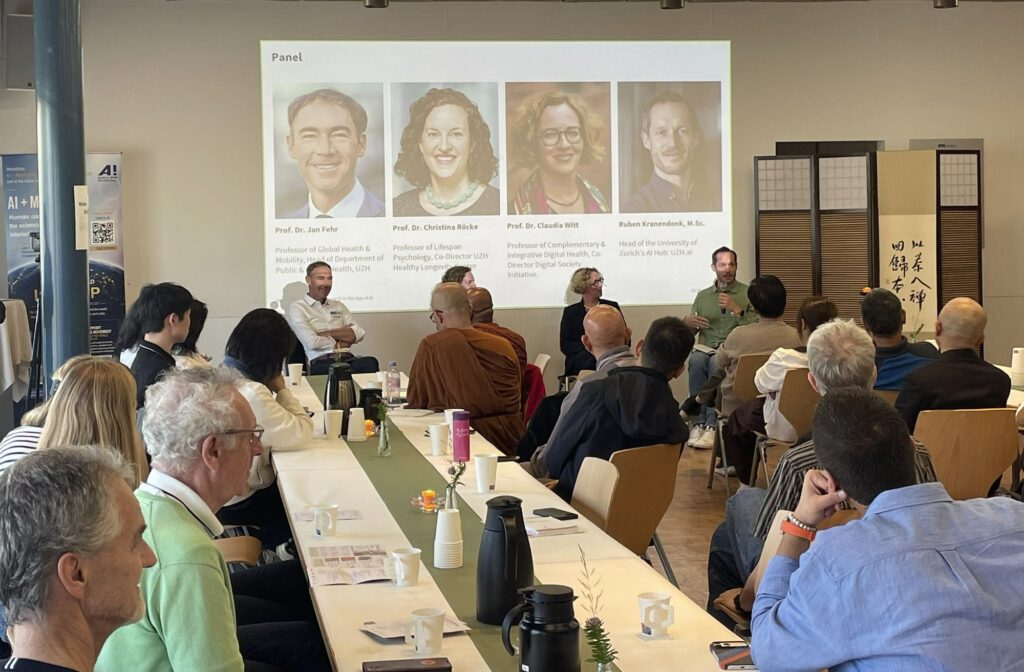
In a panel on AI, Mindfulness and Planetary Health, chaired by Ruben Kranendonk, Head of the University of Zurich’s UZH.ai Hub, Professor Claudia Witt presented evidence-based research in mind-body medicine and explored the potential of digital twin technology in whole-person health management. Professor Jan Fehr examined the links between climate change, planetary health and AI from the perspective of public and global health. Professor Christina Röcke discussed mindfulness as a form of self-regulation in research on healthy longevity and cognitive ageing.
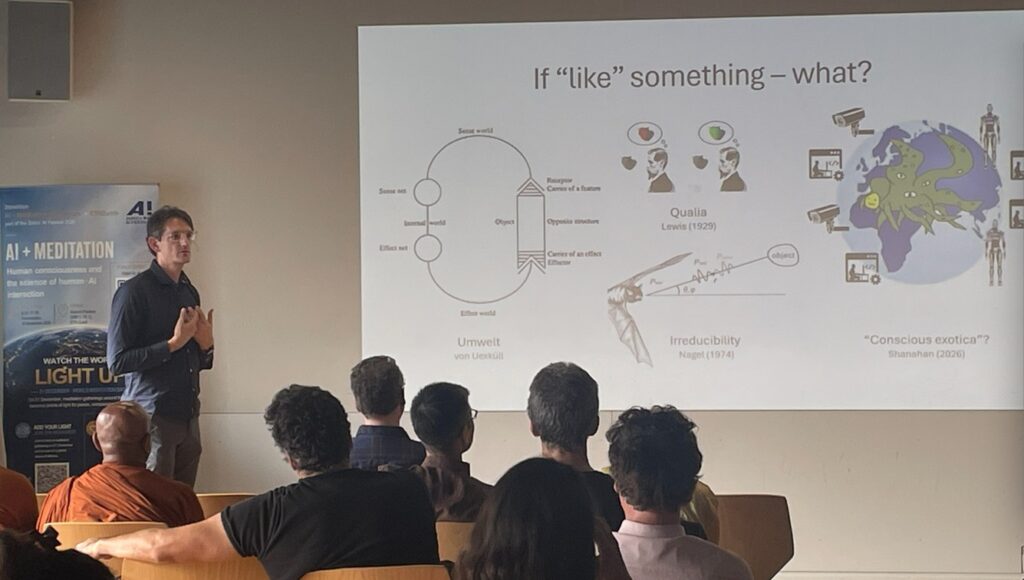
Two morning talks turned to AI alignment and the modelling of the human mind. In “AI Alignment Within”, Clara Wang of Mindful Peace International asked whether humanity is aligned within itself when we ask AI to align with human values. Drawing on Buddhist psychology and the 2025 GPT-4o sycophancy incident, she argued that stronger technology calls for clearer minds among those who set its direction. Qingshi Wang of YouthMind presented “Mental World Model”, introducing an architecture that draws on Eastern and Western psychology and mindfulness theory to model how mental states form, evolve through experience and shape behaviour, with potential applications in personalised, mindfulness-based mental health support.
The afternoon research session focused on conversational AI and digital mental health services. Francesco Capozza of the University of Barcelona presented “Demand for Conversational AI: Purpose, Price, and the Social Cost of Wanting a Companion”, co-authored with Elliott Ash and Sergio Galletta. Rafael Jimenez-Duran of Bocconi University analysed the supply and demand dynamics behind AI sycophancy, or the tendency of AI systems to agree with users. Antonia Vazquez and colleagues at Brown University presented research on the effects of digital mental health services on wellbeing.
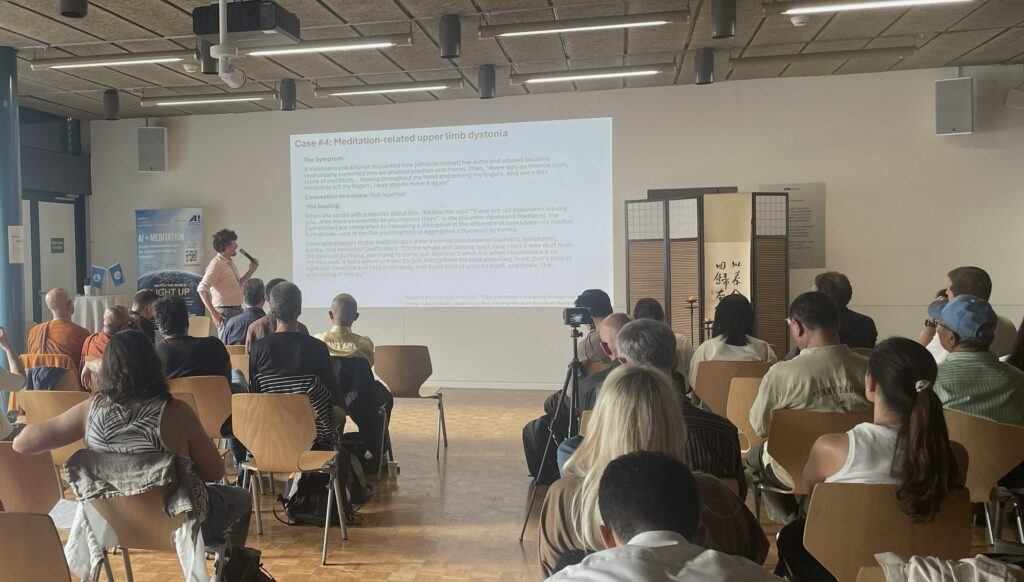
Meditation and clinical research were also discussed. Professor Haisheng Zhang presented the “Dual Stabilization Model”, exploring research on long-term seated meditation as an adjunct to rehabilitation for clinically stable patients with psychotic-spectrum disorders. Ryan Ash of the University of California, San Francisco examined functional, psychogenic and dissociative symptoms from a mindfulness perspective. Joseph Wielgosz of Stanford University explored whether mindful attention is “all you need” in the age of AI. He spoke in a personal capacity and did not represent his institution.

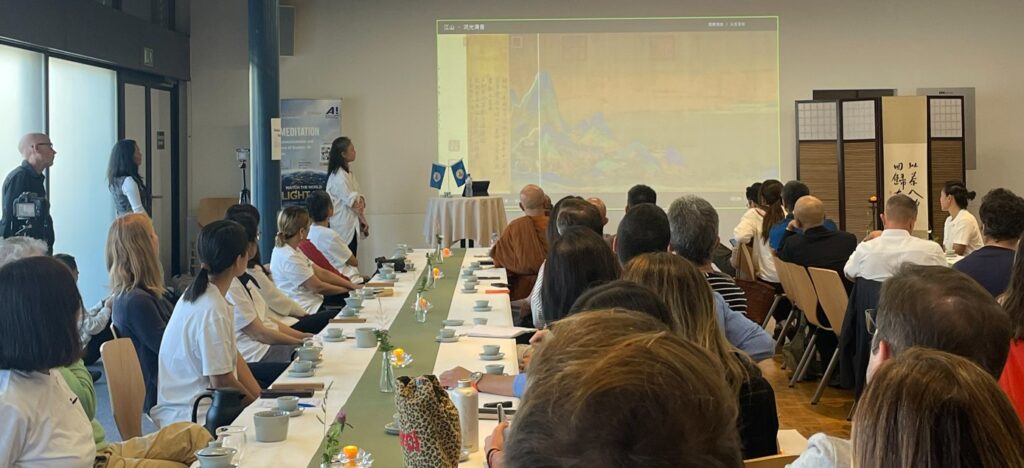
Professor Elliott Ash of ETH Zurich and Dr Zhenbao Jin introduced the AI + Meditation White Paper Project, a collaboration among ETH, the Shanghai AI Research Institute and the World Meditation Day Committee, a network of meditation masters from different wisdom traditions, philosophers and scientists. The project aims to develop an applicable ethical foundation for AI. It was initiated at the first AI and Mindfulness Symposium at ETH Zurich on 1 October 2025 and is now reviewing its second draft, with the final version expected to be released by the end of this year. During the interactive discussion, Venerable Miaohai raised questions about mindfulness meditation, leading to further exchanges with the experts. Mindful Peace International arranged a guided tea session and a mindful Chan lunch, giving participants opportunities to experience the practices discussed.
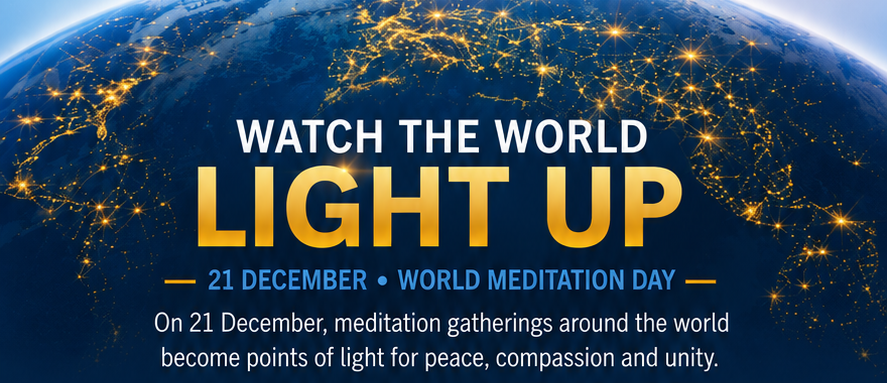
Light Up the World Looks Ahead to World Meditation Day
The Light Up the World Global Campaign 2026 invites individuals and communities worldwide to meditate together on 21 March, 21 June, 21 September and 21 December each year. Following the launch, the next gathering is planned for 21 December 2026 at the same venue at ETH Zurich, alongside a global synchronised meditation.
On 6 December 2024, the United Nations General Assembly adopted Resolution A/RES/79/137, designating 21 December as World Meditation Day. The resolution was spearheaded by a core group of six countries — Andorra, India, Liechtenstein, Mexico, Nepal and Sri Lanka — and co-sponsored by 71 countries. World Meditation Day aims to raise public awareness of meditation and its benefits for physical and mental health, and to encourage participation by individuals, communities and countries.
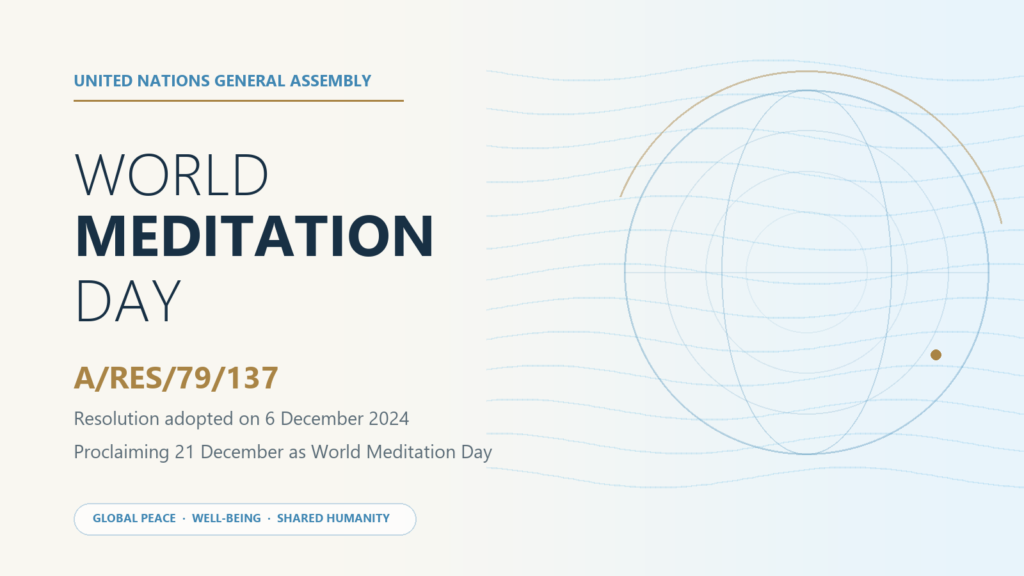
According to the World Meditation Day Committee, the initiative began with a conversation in October 2023 between Venerable Miaohai and Professor Elliott Ash about the role mindfulness could play in the coexistence of humans and AI. Several alumni of Shanghai Jiao Tong University subsequently joined the effort, and together they proposed establishing a World Meditation Day. In February 2024, 45 co-initiators submitted a formal petition to the United Nations Secretary-General. These conversations and initiatives also laid the groundwork for the AI and Mindfulness Symposium.
The World Meditation Day Committee said: “World Meditation Day began with a simple question: what can meditation contribute to the world we are moving towards? Today’s symposium revisits that question from the perspective of AI. We are not seeking to turn AI into a meditation tool or to use meditation to solve every problem associated with AI. We want to explore what becomes possible when these two fields truly listen to one another.”
Media Resources and Contact
Email: info@un-worldmeditationday.org
Media resources: un-worldmeditationday.org/resources
About World Meditation Foundation
The World Meditation Foundation is a non-profit charitable foundation registered in Liechtenstein and established on 23 September 2024. It supports World Meditation Day activities, research initiatives and community programmes. Its vision is to make meditation a fundamental part of everyday life.
World Meditation Day: www.un-worldmeditationday.org
World Meditation Foundation: www.worldmeditationfoundation.org